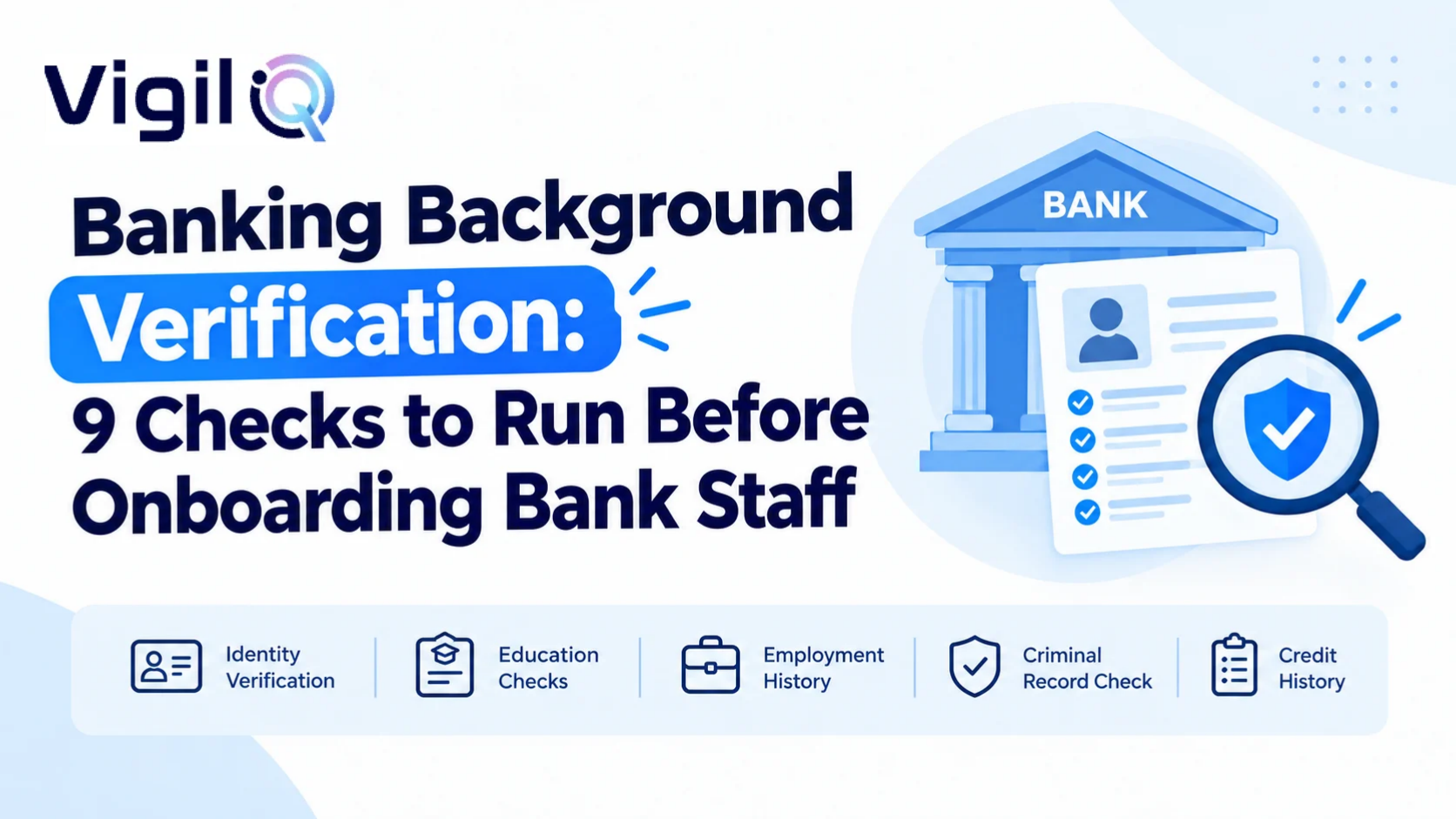
A bank runs on trust, and that trust starts with the people it hires. A teller handles cash, an operations executive touches customer records, and a relationship manager shapes how clients see the brand. One undetected lie on a CV can turn into fraud, a data leak or a regulatory problem. That is why banking background verification has become a standard step before every offer becomes a joining date. This guide walks through nine checks that banks and lenders should run for branch, operations and customer facing roles, and explains how to fit them into one smooth workflow.
Why Bank Employee Screening Needs More Than a CV
A CV is a marketing document. It shows what a candidate wants you to believe, not what can be proven. Strong bank employee screening closes the gap by testing each important claim against an independent source. Banks face a higher bar than most employers, because staff handle money, sensitive personal data and systems linked to payments. Weak hiring controls also make audits harder, since inspectors expect to see evidence that checks were done before access was granted.
Why Banks Carry Higher Hiring Risk
Fraud rings and individual bad actors both target banks for a simple reason: the rewards are direct. Insiders can approve loans improperly, misuse customer data or help outsiders bypass controls. Even honest mistakes by unqualified staff can lead to losses. Our note on the risks of hiring without verification explains how these problems begin at the offer stage.
What Regulators and Auditors Expect
Banking regulators expect institutions to hire people who are fit and proper for their roles, and internal auditors look for proof that screening was completed and recorded. A strong file shows which checks were run, when they were run, what they found and who approved the decision. If that evidence is scattered across emails and spreadsheets, the bank spends days reconstructing it. A single system of record makes every inspection faster and every hiring decision easier to defend.
The Nine Checks at a Glance
Not every role needs every check, but this is the full menu to consider:
- Identity verification
- Address verification
- Degree and certificate validation
- Past employer confirmation
- Career gap analysis
- Dual employment and moonlighting screening
- Court and police record search
- Sanctions, PEP and adverse media screening
- Credit review for money handling roles
For a wider view of what banks should include in their programme, see the main components banks verify.
Education Verification and Identity Proof: Checks 1 to 3
The first three checks confirm that the person is real, lives where they say they do and holds the qualifications they claim.
Check 1: Identity Verification
Identity is the foundation. Confirm the candidate with official documents and databases such as PAN, Aadhaar, passport, voter ID or driving licence, and match the name and date of birth across them. Digital checks return in seconds, so there is little reason to delay. Providers such as VigilIQ Global offer API driven identity checks that slot into onboarding forms, and our list of documents required for background verification in India helps HR teams collect the right papers up front.
Check 2: Address Verification
Address checks confirm that the candidate can be reached and that the stated residence is genuine. Digital methods work for many cases, while field visits suit roles where physical presence matters. A mismatched address is not always fraud, but it deserves a question before onboarding.
Check 3: Degree and Certificate Validation
Banking roles often depend on specific qualifications, from a commerce degree to a professional certification in risk or compliance. Education verification confirms with the institution or board that the degree exists, the dates are right and the grades match. Fake certificates are common enough that this step should never be skipped for roles that require a licence or credential.
A practical tip: ask candidates to upload documents in a clear format and to confirm their personal details before the check begins. Many delays come from blurred scans, spelling differences between documents or missing consent, not from the checks themselves. A short, friendly instruction page at the start of onboarding can save HR teams hours of follow up and keeps the candidate experience positive.
Employment History Check: Checks 4 to 6
Past behaviour is the best predictor of future behaviour, and past employers hold the facts.
Check 4: Past Employer Confirmation
Contact previous employers or use provident fund records to confirm job titles, dates of joining and exit, and reason for leaving. A thorough employment history check also tests whether the candidate’s claimed seniority matches the record. Inflated titles and stretched tenures are among the most common misstatements, and they matter more when the role carries approval authority.
Check 5: Career Gap Analysis
Gaps are not a red flag by themselves, since people take breaks for study, family or health. The point is to ask about them and confirm that the explanation holds. Unexplained gaps sometimes hide terminations, legal trouble or work done for a competitor.
Check 6: Dual Employment and Moonlighting Screening
Holding two full time jobs can create conflicts of interest and information risks, which is a serious concern in a bank. Provident fund based searches can reveal overlapping employment, helping HR decide whether a candidate meets the bank’s policy on outside work.
Do not forget references. A call with a former manager can reveal how the person handled pressure, targets and rules, which documents never show. Ask structured questions about reliability, integrity and reasons for leaving, and record the answers. References support the other checks, and they are especially valuable for supervisory roles where judgement matters as much as technical skill.
Criminal Record Check and Risk Screening: Checks 7 and 8
These two checks look for conduct and exposure that could harm customers or the bank.
Check 7: Court and Police Record Search
A criminal record check searches court databases and police records for cases linked to the candidate’s name and address. Banks should focus on offences that relate to the role, such as fraud, forgery, breach of trust or financial misconduct. Handle results fairly: confirm that a record belongs to the right person, consider its age and relevance, and give the candidate a chance to respond before any decision.
Check 8: Sanctions, PEP and Adverse Media Screening
Screening against sanctions lists, politically exposed person lists and negative news helps reveal reputational and compliance risk. This matters most for senior hires, treasury staff and anyone who will manage high value clients. For leadership hires, a deeper review of directorships and past disputes is also worth considering.
Special Care for Senior and Leadership Roles
Executives and senior managers can influence policy, approve large exposures and speak for the bank in public. For these roles, add deeper searches on directorships, litigation history, regulatory actions and media coverage. Take extra care to verify claims about previous achievements, because senior candidates often rely on reputation, and reputation can be built on stories nobody has tested.
Handling Adverse Results Fairly
A negative finding is the start of a conversation, not the end of one. Share the result with the candidate, allow a reasonable time to respond and check whether the information is accurate, current and relevant to the job. Record the final decision and the reasoning. A fair, documented process protects the bank from legal challenge and shows candidates that the institution acts with integrity.
Credit Check for Bank Roles and Final Rollout Steps
Check 9: Credit Review for Money Handling Roles
A credit check for bank roles looks at a candidate’s financial standing, such as defaults, heavy debt or past insolvency. It is not meant to punish people for ordinary borrowing. Its purpose is to identify financial pressure that may increase temptation in positions with direct access to cash, treasury or lending decisions. Use it only for roles where the risk justifies it, obtain written consent and explain the reason to the candidate.
Putting All Nine Checks Into One Workflow
Start by mapping each role to a risk tier. A cashier may need identity, address, employment, criminal and credit checks, while a senior treasury hire may need all nine. Next, collect consent and documents digitally at the offer stage so checks can start the same day. Connect your applicant tracking system and HR software so that statuses flow back automatically, and set clear turnaround targets for each check. Share progress with hiring managers through a simple dashboard so nobody has to ask for updates.
VigilIQ Global supports banks with identity, employment, criminal, credit and sanctions checks through one platform, with audit ready reports and integrations with more than 20 ATS and HRMS platforms. Finally, review results monthly, track mismatches by role and update your policy when patterns appear. To see how this fits into a wider programme, read our complete guide to BFSI hiring checks.
Common Mistakes to Avoid
Several errors appear again and again. Some banks screen only at the junior level and forget senior staff. Others run checks after the candidate has already joined, which defeats the purpose. A third mistake is treating screening as a one time event instead of reviewing it when someone moves into a more sensitive position. Finally, many teams collect consent informally, which creates problems later. Fixing these four habits improves protection without adding much cost or delay.
Frequently Asked Questions
How long does verification usually take?
Digital checks can return in real time, while employer and court confirmations may take a few working days.
Do all bank roles need all nine checks?
No, depth should match risk, so senior and money handling roles need more checks than support roles.
Is candidate consent required?
Yes, collect written consent before any check and tell candidates what will be verified.
What if a check shows a mismatch?
Review it fairly, ask the candidate to explain, and decide based on the role and the facts.
Should existing staff be re-screened?
Many banks re-check staff on promotion into sensitive roles or at set intervals under their policy.
Conclusion
Banks cannot afford to hire on faith. Banking background verification gives HR and risk teams proof instead of promises, and the nine checks above cover identity, history, conduct and risk in one structured process. Done well, screening speeds up hiring, because clean, verified files mean fewer surprises after the offer letter goes out and fewer difficult conversations later. Match the depth of screening to each role, keep candidates informed, and document every decision. If you want a partner that makes this simple from the first request to the final report, VigilIQ Global is ready to help.