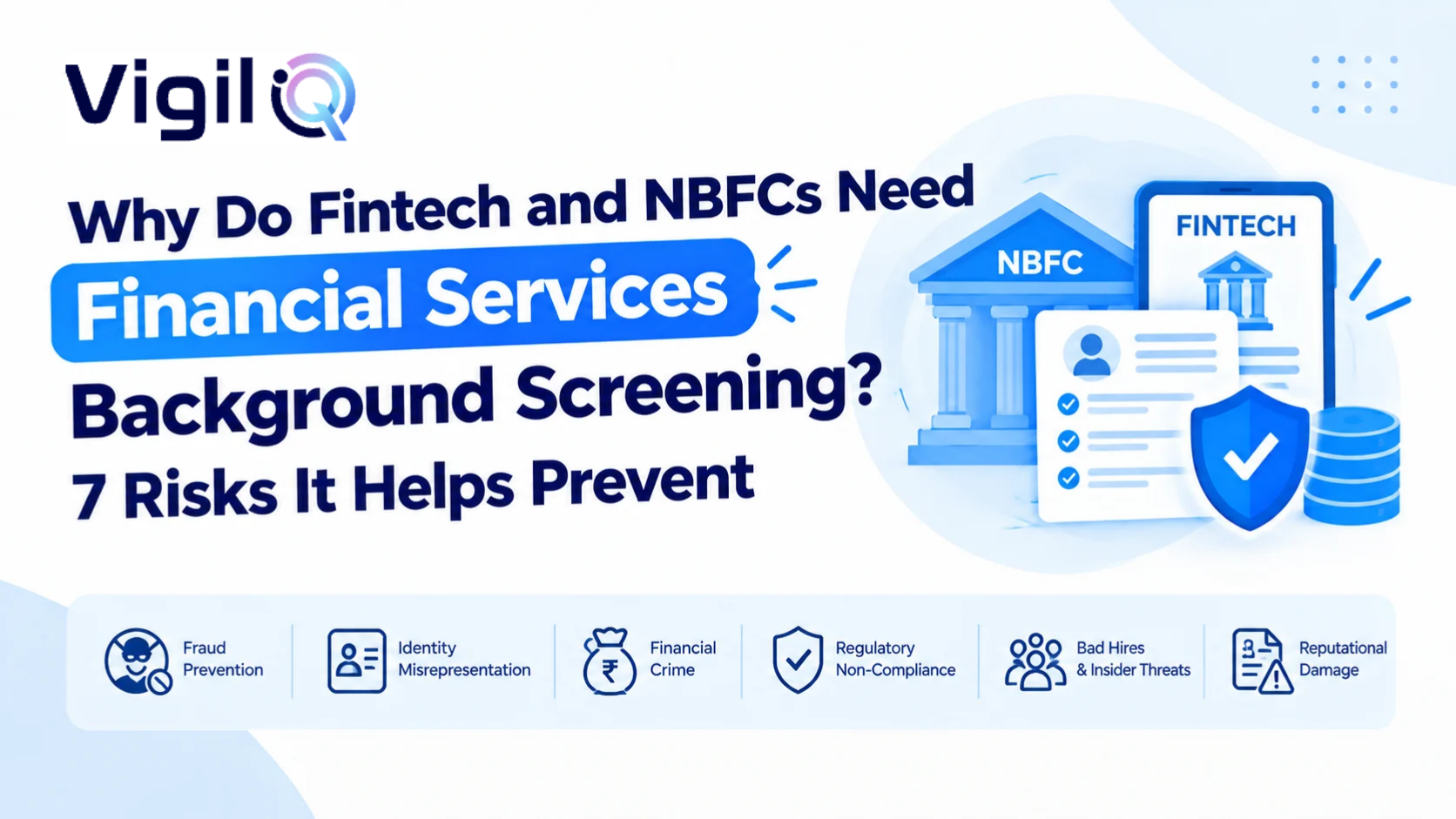
Lending moves fast, and so do the people who try to exploit it. A fake identity, a forged salary slip or a quietly dishonest employee can cost a lender far more than the salary of the person who caused it. Fintech platforms and NBFCs hire quickly, onboard agents across many cities and handle large volumes of sensitive data, which makes their people the most important line of defence. That is where financial services background screening comes in. It confirms who your staff and partners really are before they touch customer money or data. This guide explains seven risks it helps prevent and how to build a practical process around it.
Why Fintech Hiring Checks Matter More Than Ever
Fintech and NBFC teams scale at a pace that older institutions rarely face. A lender may add dozens of collection executives, tele-callers, credit analysts and engineers in a single quarter, often through recruiters and staffing partners. In that rush, fintech hiring checks are easy to skip or to run only on paper. Yet these are exactly the businesses where one insider can approve a bad loan, leak a customer list or help fraudsters bypass controls.
How Hiring Gaps Turn Into Financial Losses
Most insider incidents do not start with a dramatic plan. They start with a hire who should never have passed the screen: someone who lied about a past dismissal, used a borrowed identity or carried a history of misconduct. Our guide on how verification reduces hiring fraud shows how small gaps at the offer stage grow into large losses later.
Why Speed and Safety Can Coexist
Many hiring managers fear that screening will slow offers and push good candidates toward competitors. In practice, digital verification works in the background while the recruiter continues with interviews and paperwork. Identity and many employment records return within minutes or hours, so only complex cases need more time. Teams that start checks at the offer stage, and communicate clearly with candidates, usually keep joining dates intact while gaining far better visibility into who they are hiring.
The Seven Risks at a Glance
Screening addresses these seven risks, and each is covered in detail below:
- Fake identity or forged credentials
- Concealed history of fraud or misconduct
- Insider manipulation of loan files
- Collusion and document forgery
- Rogue or unverified field agents
- Data theft and misuse of customer information
- Regulatory penalties and audit findings
NBFC Employee Verification and the First Two Risks
NBFC employee verification is the first layer of protection because it tests the claims every candidate makes before joining. It confirms identity, past employers, qualifications and conduct, then records the evidence for auditors.
Risk 1: Fake Identity or Forged Credentials
Fraudsters now use convincing fake documents, and some candidates rely on tools that generate polished but false work histories. Our article on the rise of AI-generated fake resumes explains why traditional screening misses them. Verifying identity against official databases and matching it with employment and education records closes this gap quickly. VigilIQ Global offers API driven identity and employment checks that return many results in real time, so recruiters do not have to choose between speed and safety.
Risk 2: A Concealed History of Fraud or Misconduct
A person dismissed for misconduct at one lender can resume work at another if nobody asks the right questions. Past employer confirmation, reference calls and court record searches help reveal patterns that a CV hides. Gaps in the timeline deserve polite but firm questions, because unexplained months sometimes cover exits that the candidate would rather not discuss. For a wider view of how identity problems enter hiring, read our note on identity fraud in employee hiring.
Matching Check Depth to the Role
Not every employee needs the same package. A support executive who never touches money may need identity, address and employment confirmation, while a credit officer needs those plus court records and a financial review. Engineers with access to production data deserve careful screening too, even though they never meet a customer. Tiering roles keeps costs sensible and avoids the common mistake of screening heavily at the top while leaving large groups of lower level staff unchecked.
Strengthening Loan Fraud Prevention Through People Checks
Most discussions of loan fraud prevention focus on applicant verification, such as income proofs and bureau data. Those controls matter, but they fail when the person reviewing the file is part of the problem. People screening protects the process from the inside.
Risk 3: Insider Manipulation of Loan Files
Credit analysts, underwriters and operations staff can change figures, overlook red flags or push weak files through. Screening reduces the chance that a high risk individual reaches these roles. For sensitive positions, add a credit review and a check for dual employment, since financial pressure or hidden side businesses can create conflicts of interest.
Warning Signs Inside the Organisation
Alongside screening, train managers to notice behaviour that points to trouble. Examples include files that always pass through the same person, unusually high approval rates on weak profiles, staff who avoid leave or refuse rotation, and close personal ties between employees and agents. None of these proves wrongdoing, but together with screening results they help risk teams decide where to look first.
Risk 4: Collusion and Document Forgery
The hardest fraud cases involve more than one party, such as an employee, an agent and an applicant working together. Collusion thrives when nobody has verified the relationships and histories behind the people involved. Checks on prior employers, links to sanctioned or defaulting entities and unusual connections between staff and partners help surface these risks early. Regular re-screening of staff in high risk roles adds another layer, because circumstances change after joining.
DSA and Agent Verification for Field Partners
Many lenders rely on direct selling agents, brokers and collection partners to reach customers. These partners represent your brand even though they are not on your payroll. Regulators expect lenders to remain accountable for the conduct of agents and service providers acting for them, so screening partners is not optional housekeeping. It is part of managing outsourced risk.
Risk 5: Rogue or Unverified Field Agents
An unverified agent can mis-sell products, collect fees illegally, forge documents or harass borrowers during recovery. Any of these can lead to complaints, penalties and public embarrassment. Strong DSA and agent verification confirms identity, address, past conduct and, where relevant, business registration before an agent is activated. It also keeps a record that shows the lender took reasonable care in choosing its partners.
Agent networks also change quickly. New sub agents join through existing partners, and a lender may not even know who is representing it in a given town. Insist that partners disclose everyone who sells or collects on your behalf, and verify those individuals too. A written agreement that makes screening a condition of working with you gives you the right to remove anyone who fails.
What to Check Before Activating a Partner
Start with identity and address, then add court record searches and, for agencies, business and director checks. Ask for references from other lenders and review any history of disputes. After activation, monitor complaints and refresh checks at regular intervals, since an agent who was clean last year may not be clean today.
Why KYC and AML Discipline Starts With Staff
Customer onboarding rules apply to borrowers, but the staff who run those processes need the same scrutiny. A team that is careless or compromised weakens even the best written policy, so KYC and AML controls work only when the people operating them are trustworthy.
Training and Culture Matter Too
Screening tells you who someone was before joining. Training and culture shape who they become afterwards. Explain to every new joiner why customer data is sensitive, how to report suspicious requests and what happens when rules are broken. A workforce that understands the reasons behind controls follows them far more reliably than one that only fears getting caught.
Risk 6: Data Theft and Misuse of Customer Information
Lenders hold identity documents, bank details, contact numbers and credit data. Staff with access can sell it, misuse it or leave with it. Screening cannot remove this risk completely, but it filters out people with documented dishonesty and supports strict access rules. Pair it with role based permissions, activity logs and clear exit procedures for a stronger defence.
Risk 7: Regulatory Penalties and Audit Findings
Supervisors and auditors increasingly ask lenders to show how they choose, train and monitor staff and partners. Missing files, inconsistent checks and unexplained exceptions lead to adverse findings and, in serious cases, penalties or restrictions on business. Complete screening records, stored securely and easy to retrieve, turn an audit from a scramble into a routine review. To see how sanctions screening differs from broader AML duties, read how sanctions screening differs from AML duties.
Building a Practical Screening Workflow
Begin by grouping roles by risk: customer facing and back office staff, credit and finance roles, technology staff with data access, and external agents. Assign a standard check package to each group, collect consent digitally at the offer stage and trigger checks automatically through your hiring and onboarding systems. VigilIQ Global connects with more than 20 ATS and HRMS platforms and delivers audit ready reports, which helps lenders keep every file in one place. For ideas on what can be automated, see our list of checks you can automate with an API suite.
Frequently Asked Questions
Is screening mandatory for NBFC staff?
Rules vary by role and regulator, but lenders are expected to hire carefully and show evidence of it.
How long does screening take?
Digital identity checks can return in real time, while employer and court confirmations may take a few days.
Should agents be screened like employees?
Yes, agents represent your brand and handle customers, so they need identity, address and conduct checks.
Can screening stop all fraud?
No, but it removes a major source of risk and works best alongside access controls and monitoring.
How often should checks be refreshed?
Refresh at promotion into sensitive roles and at regular intervals set by your risk policy.
Conclusion
Lenders succeed when customers trust them and regulators see consistent control. Financial services background screening supports both, because it filters risky people out before they can cause harm and leaves a clean record of every decision. Group your roles by risk, screen staff and partners with the right checks, and refresh those checks as circumstances change. If you want a partner that makes the process fast and audit ready, VigilIQ Global is ready to help.