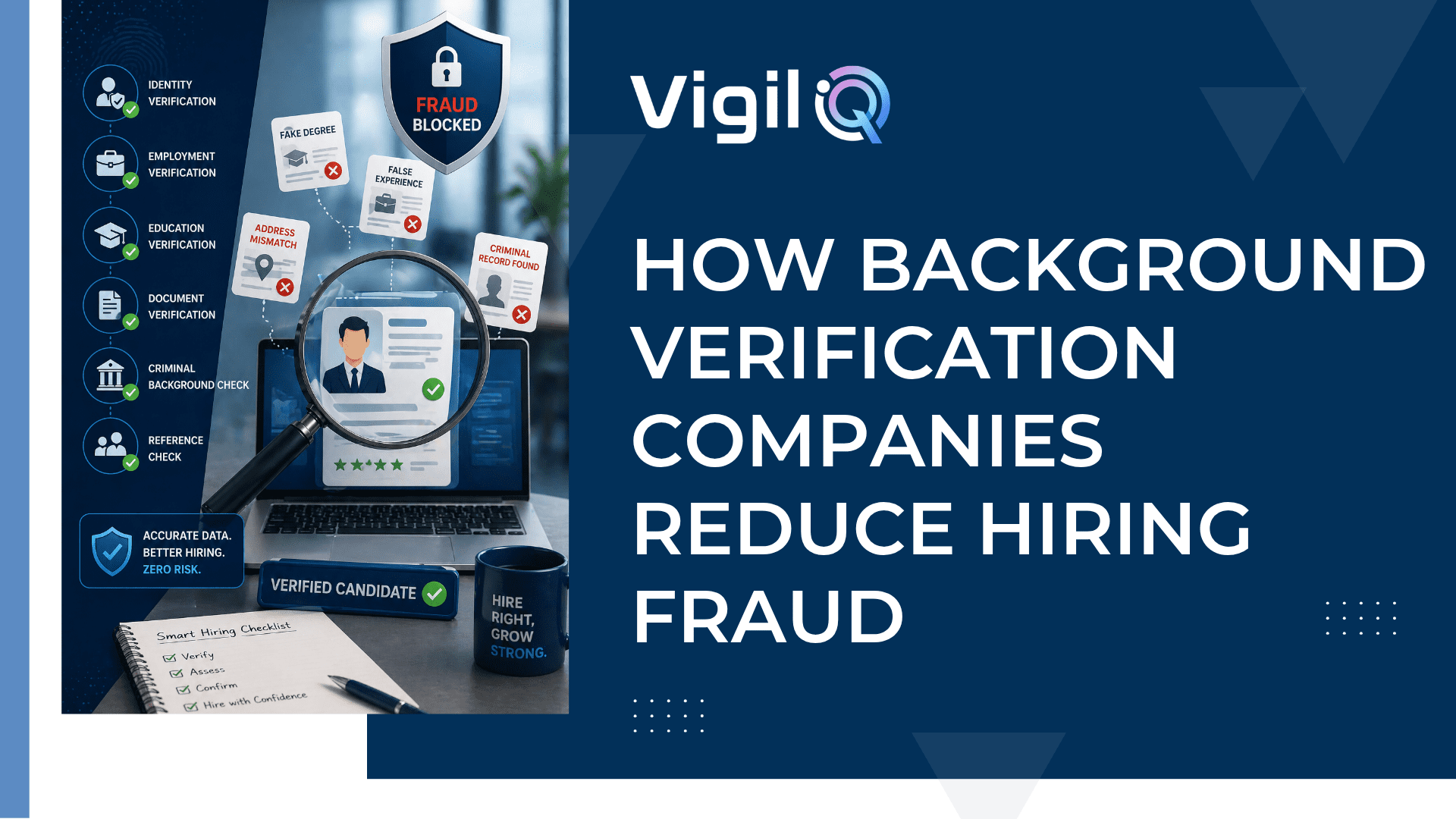
How to Reduce Hiring Fraud Using Background Verification
Introduction
Hiring fraud is increasing rapidly, and businesses across industries are actively looking for ways on how to reduce hiring fraud in modern recruitment. With the rise of remote hiring, digital resumes, and global talent pools, it has become easier for candidates to misrepresent their credentials.
From fake employment history to forged documents, hiring fraud can lead to serious financial, operational, and reputational risks. Therefore, organisations must adopt structured verification processes to ensure accurate hiring decisions.
In this blog, we will explore how to reduce hiring fraud, the role of background verification, and the best strategies businesses can implement to protect their hiring process.
👉 To understand the complete verification workflow, read:
https://vigiliqglobal.com/background-verification-process-in-india/
What Is Hiring Fraud?
Hiring fraud occurs when candidates provide false, misleading, or incomplete information during recruitment.
Common examples include:
- Fake employment experience
- Forged educational certificates
- Identity misrepresentation
- Hidden criminal records
- Fabricated references
Without proper verification, these issues often go unnoticed until after hiring, causing long-term problems for organisations.
Why Businesses Need to Know How to Reduce Hiring Fraud
Understanding how to reduce hiring fraud is essential for maintaining a secure and reliable workforce. As hiring becomes faster, the risk of overlooking critical checks increases.
Key reasons hiring fraud is rising:
- Remote and virtual hiring processes
- Increased competition among candidates
- Easy access to fake documents
- Lack of structured verification systems
Businesses that fail to address these risks may face financial losses, compliance issues, and reputational damage.
How to Reduce Hiring Fraud in Recruitment
1. Conduct Identity Verification
One of the most effective ways to reduce hiring fraud is to verify candidate identity.
This includes:
- Aadhaar, PAN, or passport verification
- Name and date of birth validation
- Address history checks
Identity verification ensures that candidates are genuine and prevents impersonation.
2. Verify Employment History
Employment verification is critical to confirm a candidate’s work experience.
This involves:
- Contacting previous employers
- Validating job roles and tenure
- Confirming exit details
This step helps organisations understand how to reduce hiring fraud by eliminating fake experience claims.
3. Perform Education Verification
Fake degrees are a common issue in hiring fraud.
To prevent this:
- Verify educational institutions
- Validate degrees and certifications
- Cross-check academic records
This ensures candidates meet job requirements.
4. Conduct Criminal Background Checks
Criminal verification helps identify potential risks.
This includes:
- Court record searches
- Police verification
- National database screening
This step is essential for maintaining workplace safety and compliance.
5. Use Document Verification Tools
Modern hiring uses AI-based tools to detect:
- Forged documents
- Altered certificates
- Inconsistent data
These tools improve accuracy and help organisations reduce hiring fraud more efficiently.
6. Implement Address Verification
Address checks confirm a candidate’s residential details.
This is important for:
- Field roles
- Logistics operations
- Financial positions
Accurate address verification reduces identity-related risks.
7. Conduct Reference Checks
Reference checks provide deeper insights into candidates.
They help verify:
- Work behaviour
- Professional ethics
- Reliability
This adds an additional layer of fraud prevention.
8. Use Database Screening
Database checks identify hidden risks by screening:
- Government records
- Watchlists
- Fraud databases
This ensures comprehensive verification and helps reduce hiring fraud.
Role of Background Verification in Reducing Hiring Fraud
Background verification plays a central role in helping businesses understand how to reduce hiring fraud effectively.
Verification providers combine:
- Data validation
- Technology
- Human expertise
This ensures accurate and reliable hiring decisions.
👉 Explore more:
https://vigiliqglobal.com/bgv-companies-in-india/
Manual vs Digital Verification: What Works Better?
Traditional verification methods are slow and prone to errors. However, digital verification systems offer faster and more accurate results.
Benefits include:
- Real-time verification
- Reduced manual effort
- Improved accuracy
- Scalability for large hiring volumes
👉 Related read:
Manual vs API-Based Verification
Industries Most Affected by Hiring Fraud
Hiring fraud impacts several industries, including:
- BFSI
- IT and SaaS
- Healthcare
- Logistics
- Education
These industries require strong verification processes to ensure compliance and security.
Real-World Example: Hiring Fraud Impact
Consider a company hiring a candidate for a financial role without verification.
Later, it discovers:
- Fake employment history
- Incorrect qualifications
- Financial misconduct
The result:
- Financial losses
- Operational disruption
- Reputational damage
This highlights why businesses must understand how to reduce hiring fraud.
Best Practices to Reduce Hiring Fraud
To build a secure hiring process:
- Always verify identity documents
- Conduct employment and education checks
- Use automated verification tools
- Partner with reliable verification providers
- Implement multi-layer screening
These practices ensure safer hiring decisions.
Challenges in Reducing Hiring Fraud
Despite advancements, challenges remain:
- Fake digital documents
- Limited access to data
- Manual delays
- Global verification complexities
However, technology continues to improve detection capabilities.
Future of Hiring Fraud Prevention
The future of hiring focuses on:
- AI-powered verification
- Blockchain-based credentials
- Real-time global verification
- Automated compliance systems
These innovations will make hiring more secure and efficient.
Frequently Asked Questions (FAQs)
How can companies reduce hiring fraud?
They can reduce hiring fraud by verifying identity, employment, education, and criminal records.
What is the most common hiring fraud?
Fake employment history and forged certificates are the most common.
How to reduce hiring fraud in recruitment?
Use structured background verification, automated tools, and multi-layer checks.
Is background verification necessary for all companies?
Yes, it is recommended for all businesses to minimise risk.
How long does verification take?
It can take from a few hours to several days depending on the checks.
Can hiring fraud be completely eliminated?
No, but it can be significantly reduced with proper processes.
Conclusion
Understanding how to reduce hiring fraud is essential for building a secure and trustworthy workforce. As hiring becomes more complex, businesses must adopt reliable verification strategies to protect themselves from fraud risks.
Background verification plays a key role in ensuring accurate hiring decisions, reducing risks, and maintaining compliance. Companies that invest in structured verification processes will be better positioned to hire confidently and build long-term success.