Hiring in India moves fast, and resume fraud moves faster. Recruiters who still chase former employers by phone and email lose days on every candidate, and some of those candidates lose patience and accept another offer. That is why API employment verification in India has become a priority for HR leaders who want quick, reliable proof of work history. Instead of waiting on manual follow ups, a business sends a request through an API and receives structured results in minutes. This guide explains how the process works, what benefits it brings, where it fits best, and how to connect it with the tools your team already uses.
What Is an Employment Verification API and How Does It Work?
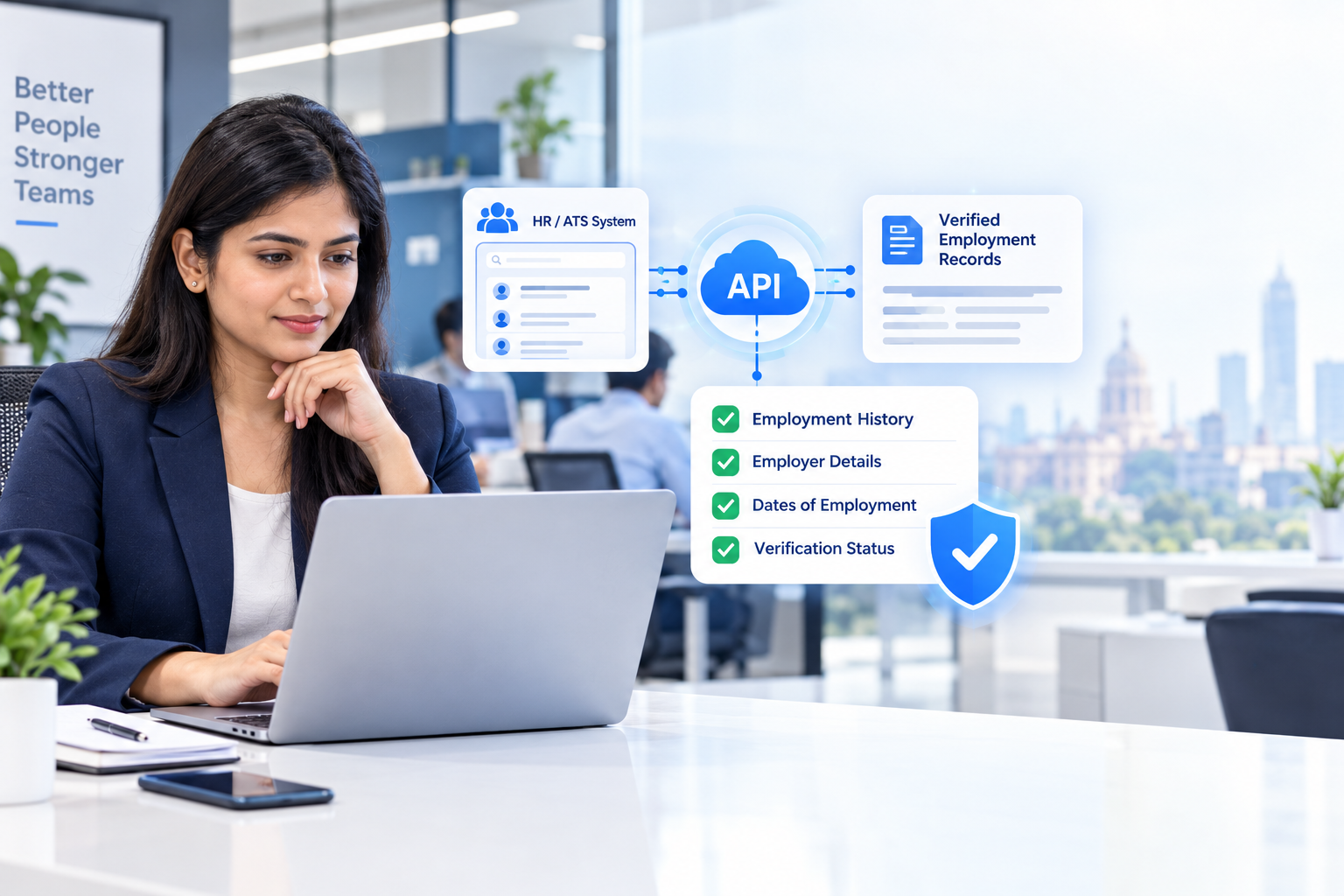
An employment verification API is a secure software connection that lets your hiring system ask a verification provider to confirm a candidate’s work history and receive the answer in a structured format. Rather than sending emails to HR departments and waiting for replies, your team triggers a request from its own dashboard or applicant system. The provider then checks trusted records and returns clear fields such as employer name, designation, tenure and verification status. The whole exchange happens in the background while your recruiter moves on to the next task.
The Data Sources Behind the Check
Most checks rely on a mix of sources. Provident fund records linked to a candidate’s Universal Account Number show which establishments contributed on the person’s behalf and for how long. CV validation then compares the claims on a resume against those records. Where statutory data is incomplete, providers reach out to former employers directly and log the response. A dual employment check adds another layer by flagging overlapping jobs, which matters for companies worried about moonlighting.
The Request and Response Flow
The flow is simple. Your system collects the candidate’s consent and basic details, then sends them to the provider’s endpoint, where the call is authenticated. The provider matches the details with its data sources and returns a structured response. Digital record checks often come back in real time, while manual employer confirmations take longer. Status updates then appear in your dashboard or flow into your hiring software automatically, so nobody has to refresh a page or maintain a tracking spreadsheet.
Why Indian Employers Are Shifting to APIs
Three pressures push companies in this direction. Candidates now change jobs more often, so work histories are longer and harder to confirm by hand. Remote and high volume hiring means recruiters rarely meet applicants in person before an offer. Finally, clients and auditors increasingly ask for documented proof that screening happened. An API answers all three by turning verification into a repeatable, trackable step that sits inside the hiring workflow instead of beside it. Teams that once waited a week for replies can now see most digital results within the same working day.
Benefits of Automated Background Verification for Indian Employers
Manual checks made sense when a company hired a handful of people each month. They fall apart as volumes grow, which is why automated background verification has become the default choice for scaling teams. Here is what employers typically gain:
- Faster offers, because digital records return results quickly and strong candidates are not lost to slower competitors.
- Lower fraud risk, because record based checks catch inflated tenures, fake employers and forged experience letters that a phone call can miss.
- A consistent process, because every candidate goes through the same steps and auditors see a clean trail.
- Less repetitive work, because recruiters stop chasing replies and focus on interviews and onboarding.
- Stronger compliance, because time stamped reports and consent logs show that screening followed your policy and applicable data protection rules.
- Easy scaling, because the same setup handles ten checks or ten thousand without extra headcount.
There is also a quieter benefit. When checks run on every hire in the same way, candidates trust the process more, because it feels fair and professional. Honest applicants get cleared quickly, and the few who exaggerate are caught early, before they join and before their mistakes become your problem. That protects your team, your clients and your reputation at the same time.
If you want to see how older methods compare, read our breakdown of how manual screening stacks up against automated methods.
How a Verification API for HR Teams Fits Different Industries
Every sector carries its own hiring risks, and a flexible verification API for HR teams can be tuned to each one. In every case, API employment verification India gives recruiters evidence they can act on instead of assumptions they have to trust.
IT and Technology Companies
Developers and project managers often handle client data and intellectual property. Confirming past employers and tenure protects that access. Because IT hiring moves quickly, results that arrive before the notice period ends keep joining dates on schedule.
Banking, Finance and Insurance
Regulated institutions are expected to screen staff carefully, especially those who handle money, credit decisions or customer accounts. Verified work history supports audit readiness, and lenders also use employment checks to assess applicants for loans and credit products.
Staffing, E-commerce and Retail
Staffing agencies and online retailers onboard large batches of people across several cities. Bulk requests and live status tracking let them verify high volumes without growing the screening team. Providers such as VigilIQ Global tailor packages to these sectors, so a delivery partner and a finance manager do not follow the same checklist.
Healthcare and Education
Hospitals, clinics and schools depend on staff whose credentials matter to public safety. Confirming previous employment alongside qualification checks helps these institutions avoid placing unverified people in sensitive roles, and it gives administrators a documented record if questions arise later.
For more on how the API model changes day-to-day screening, see how background verification APIs are transforming hiring.
Smoother Hiring Through ATS Integration
Your applicant tracking system is where candidates move from application to offer, so it is the natural place to start verification. With ATS integration, a recruiter drags a candidate to the offer stage and the check begins on its own. The candidate receives a consent request, the provider runs the check, and the result is written back to the candidate profile. Recruiters stay inside one screen, and hiring managers see the verification status next to interview feedback.
This setup also reduces data entry errors. Details are captured once and reused, which means fewer mismatched names, dates and employer spellings, the very problems that cause false negatives in verification. To understand the wider value of connecting several checks through one platform, explore the benefits of using an API suite for background checks.
Smart teams also use the integration to improve their funnel. Because verification status is visible in the same place as interview notes, recruiters can spot delays early, nudge candidates who have not completed consent, and keep offer letters from stalling. Over time, the data shows which roles or locations see the most mismatches, which helps you adjust your screening rules with evidence instead of guesswork.
Steps for Successful HRMS Integration
HRMS integration brings verification into the same system that stores employee records, payroll data and onboarding tasks. A careful rollout avoids surprises. Follow these five steps.
Step 1: Define the Checks You Need
List the roles you hire for and decide which checks each role requires. A senior finance hire may need employment history, education and criminal record checks, while a warehouse role may need only identity and recent employment.
Step 2: Get Access and Test
Request credentials from your provider and run test calls with sample data. Confirm that responses contain the fields your team needs and that error messages are clear enough to troubleshoot quickly.
Step 3: Map Fields and Consent
Match the provider’s response fields with your system’s fields. Add a consent step that explains what is being checked and why. India’s Digital Personal Data Protection Act, 2023 expects lawful, purpose limited use of personal data, so keep consent records alongside every request.
Step 4: Connect Triggers and Webhooks
Decide which hiring stage triggers a check and set up webhooks so results return automatically. Add retry logic for timeouts and a clear route for cases that need manual follow up. Log every request and response so your team can trace any dispute back to its source quickly.
Step 5: Go Live and Monitor
Start with one team or location, review turnaround times and mismatch rates for a few weeks, and then expand. VigilIQ Global connects with more than 20 ATS and HRMS platforms, which shortens the setup for many teams.
Security and Data Protection Checks
Before you sign with any provider, ask how they protect candidate data. Look for encryption in transit and at rest, role based access, audit logs and an independent certification such as SOC 2 Type II. Also confirm how long data is stored and how it is deleted on request. Verification involves sensitive personal records, so a weak security posture is a risk to your candidates and to your own legal standing, no matter how fast the service is.
Frequently Asked Questions
How fast can an API return employment details?
Digital record checks can return in real time, while confirmations that need an employer reply may take one to three days.
Do I need candidate consent before running a check?
Yes, always collect and store the candidate’s consent before sending any request, since personal data is involved.
What details does the response usually include?
Expect employer name, designation, joining and exit dates, and a clear verification status.
Can the API detect fake experience or moonlighting?
Yes, record matching and dual employment checks flag false tenures and overlapping jobs.
Is it only for large enterprises?
No, startups and small teams also use it because setup and usage scale with hiring volume, so you can start small.
Conclusion
Employment fraud is not going away, but slow and manual checks no longer have to be your only defence. API employment verification in India gives hiring teams fast, structured, and consent-based proof of work history, and it fits neatly into the systems recruiters already use. Employers that adopt this approach early gain a real edge, because they hire verified talent faster while competitors are still waiting for email replies. Start with a clear list of checks, test carefully, connect your tools, and expand in stages. If you want a partner that supports this journey from setup to scale, VigilIQ Global is ready to help.