Introduction
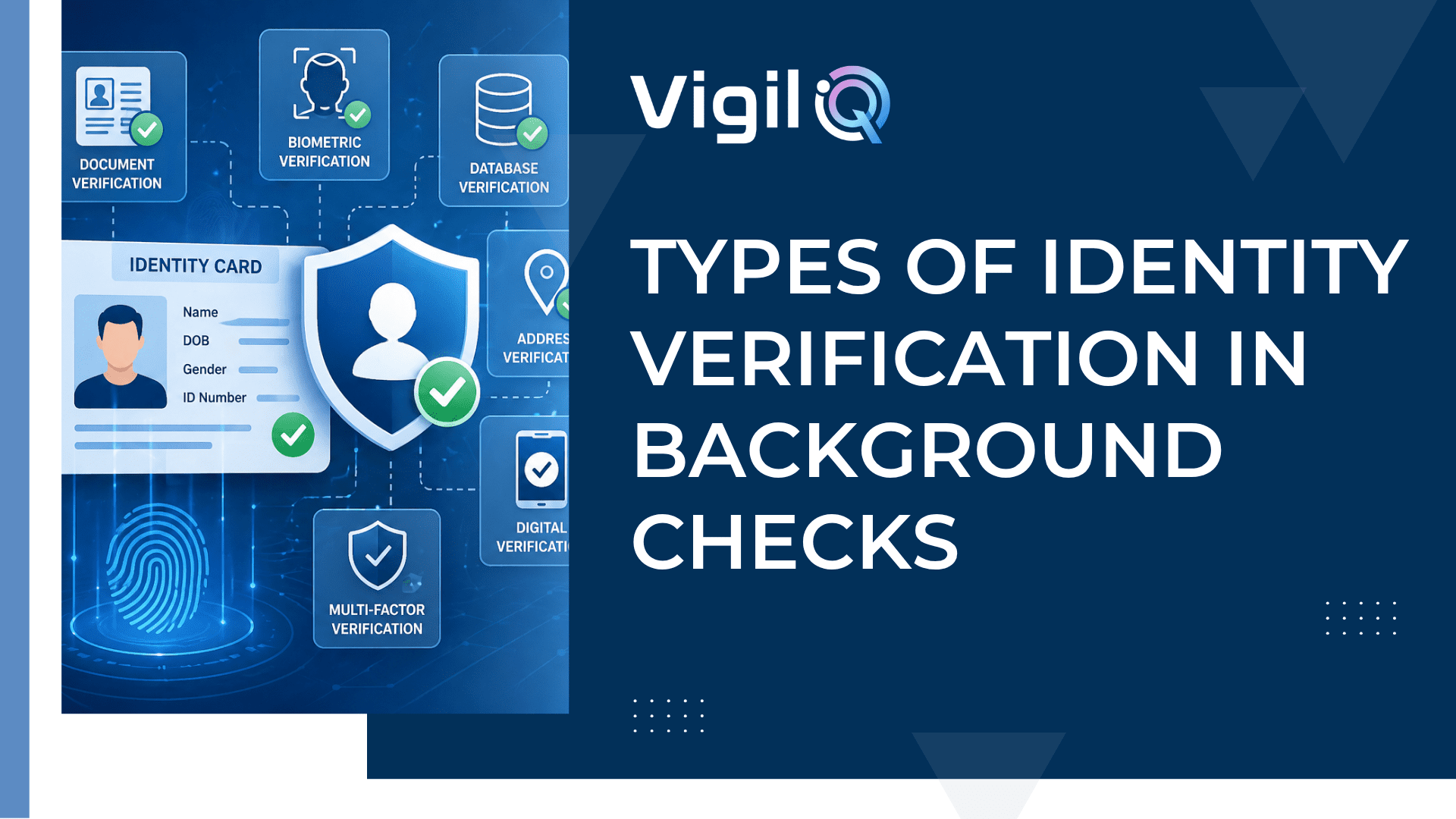
Understanding the types of identity verification is essential for businesses that want to ensure safe and accurate hiring. In today’s digital hiring environment, organisations must verify candidate identities using reliable methods to prevent fraud, ensure compliance, and build trust. As remote hiring and online onboarding increase, identity verification has become a critical step in every background check process.
Without proper identity verification, companies risk hiring candidates with false identities, forged documents, or misrepresented credentials. This can lead to financial loss, compliance issues, and long-term reputational damage.
👉 To understand the full verification workflow, read:
https://vigiliqglobal.com/background-verification-process-in-india/
What Is Identity Verification in Background Checks?
Identity verification is the process of confirming that a candidate is genuinely who they claim to be. It ensures that all background checks are conducted on the correct individual.
This includes validating:
- Name and date of birth
- Government-issued identification
- Address details
- Supporting documents
Identity verification forms the foundation of every background screening process.
Why Identity Verification Matters in Hiring
Before exploring the types of identity verification, it’s important to understand its significance.
Identity verification helps businesses:
- Prevent identity fraud
- Ensure data accuracy
- Maintain regulatory compliance
- Protect sensitive company data
- Build trust in hiring decisions
Without proper identity validation, even advanced background checks can produce unreliable results.
Key Types of Identity Verification in Background Checks
1. Document-Based Identity Verification
This is the most commonly used method.
It involves verifying official documents such as:
- Aadhaar card
- PAN card
- Passport
- Driving licence
These documents are checked for authenticity and matched with official records.
Advantages:
- Widely accepted
- Easy to implement
- Provides basic identity validation
Limitations:
- Documents can be forged
- Requires additional checks for accuracy
2. Database Identity Verification
This method verifies identity using trusted databases.
Sources include:
- Government records
- Financial institutions
- Telecom databases
Candidate details are matched against these databases to confirm accuracy.
Benefits:
- High reliability
- Faster verification
- Reduces manual effort
3. Biometric Identity Verification
Biometric verification uses unique physical characteristics.
Common types include:
- Fingerprint scanning
- Facial recognition
- Iris scanning
Advantages:
- Highly secure
- Difficult to manipulate
- Ensures real-time verification
Use Cases:
- Banking and finance
- Government systems
- High-security roles
4. Digital Identity Verification
Digital verification uses technology and APIs for real-time validation.
Features:
- Instant verification
- Automated processes
- Integration with HR systems
Benefits:
- Faster hiring
- Reduced manual errors
- Scalable for large organisations
👉 Related read:
Manual vs API-Based Verification
5. Address Verification
Address verification confirms a candidate’s residence.
Methods include:
- Physical verification
- Utility bill checks
- Digital address validation
Importance:
- Confirms identity consistency
- Reduces fraud risks
6. Video-Based Identity Verification
Video KYC is widely used in digital onboarding.
How it works:
- Candidate verifies identity via video
- Documents are shown live
- Face match is confirmed
Benefits:
- Remote-friendly
- Real-time validation
- Enhanced security
7. Social Identity Verification
This method involves reviewing public online profiles.
Checks include:
- Social media presence
- Behavioural consistency
- Identity alignment
⚠️ Must be conducted ethically and within legal guidelines.
8. Multi-Factor Identity Verification
This combines multiple verification methods.
Example:
- Document + biometric verification
- Database + address validation
Advantages:
- Higher accuracy
- Strong fraud prevention
- Improved reliability
9. Knowledge-Based Verification
This method verifies identity using personal questions.
Examples:
- Previous addresses
- Financial history
- Personal details
Limitations:
- Less secure
- Depends on available data
10. Government API-Based Verification
This uses official APIs for instant validation.
Examples:
- Aadhaar verification API
- PAN verification API
Benefits:
- Real-time results
- Highly accurate
- Scalable
How to Choose the Right Identity Verification Method
Selecting the right method depends on:
- Industry requirements
- Risk level
- Hiring volume
- Compliance needs
- Budget
Most organisations use a combination of methods for best results.
Role of Background Verification Providers
Professional verification providers help businesses implement the right identity verification strategy.
They offer:
- Access to trusted databases
- Advanced verification tools
- Compliance support
- Scalable solutions
👉 Explore more:
https://vigiliqglobal.com/bgv-companies-in-india/
Challenges in Identity Verification
Despite advancements, identity verification still faces challenges:
- Fake digital documents
- Identity theft
- Data inconsistencies
- Privacy concerns
However, technology is continuously improving verification systems.
Future of Identity Verification in Background Checks
The future is driven by innovation and automation.
Key trends include:
- AI-powered verification
- Blockchain-based identity systems
- Real-time global verification
- Digital identity ecosystems
These developments will enhance accuracy, speed, and security.
Best Practices for Identity Verification
To ensure effective identity verification:
- Use multiple verification methods
- Validate data from trusted sources
- Implement digital verification systems
- Ensure compliance with regulations
- Work with reliable providers
Frequently Asked Questions (FAQs)
What are the types of identity verification?
They include document verification, biometric checks, database validation, digital verification, and multi-factor authentication.
Which identity verification method is most secure?
Biometric and multi-factor verification are the most secure methods.
Can identity verification be done online?
Yes, digital and API-based systems allow real-time verification.
Why is identity verification important in hiring?
It prevents fraud, ensures accuracy, and protects businesses from risk.
How long does identity verification take?
It can take from minutes to a few days depending on the method used.
Do all companies need identity verification?
Yes, it is essential for safe and reliable hiring across all industries.
Conclusion
Understanding the types of identity verification is critical for building a secure hiring process. From document checks to advanced biometric systems, each method plays a vital role in ensuring accuracy and preventing fraud.
As hiring continues to evolve, businesses must adopt modern verification strategies to stay ahead of risks. By combining multiple verification methods and leveraging technology, organisations can create a trustworthy and efficient workforce.