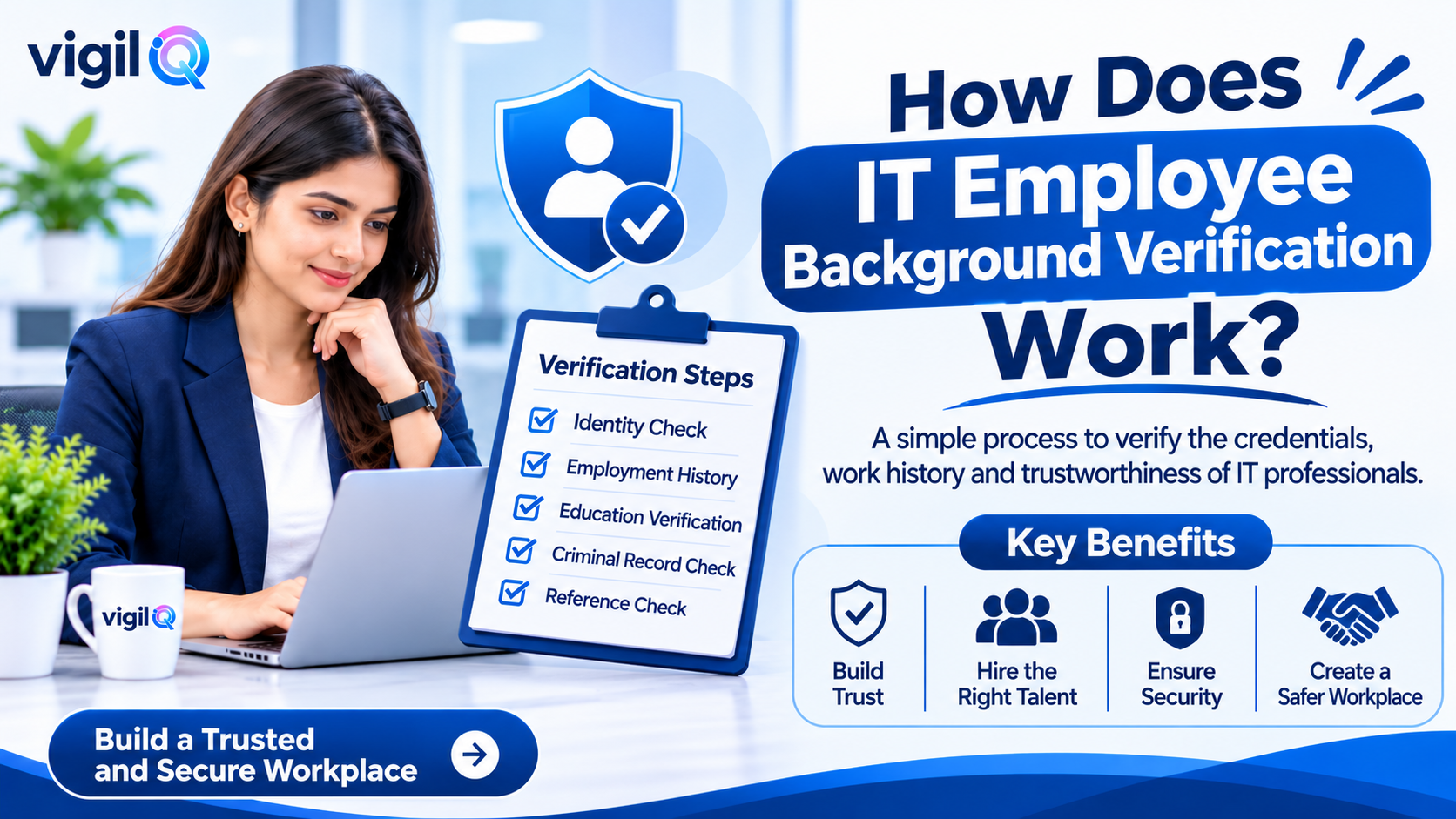
Every software company depends on people it has never fully tested. You can run coding rounds and system design interviews, but those tell you little about whether a candidate’s degree is real, whether the last job ended well, or whether the person on the video call is who they claim to be. That is where IT employee background verification comes in. It is the organized process of confirming identity, education, work history and legal standing before a candidate receives access to code, client data and internal systems. This guide explains how the process works from consent to final report, what each check involves, and how to run it without slowing down hiring.
Whether you are a founder hiring your first ten engineers or an HR leader managing a large intake across several cities, understanding the mechanics helps you set clear expectations with candidates, budget the right amount of time and choose checks that match each role. The sections below walk through the full journey in plain language.
By the end, you will know which steps matter most, where delays usually happen and how to keep both candidates and clients confident in your hiring.
What Is Employee Verification for IT and Why It Matters
Employee verification for IT teams is the practice of independently confirming the facts a candidate provides during hiring. Instead of trusting a resume at face value, the employer asks a trained third party to check each claim against original sources such as universities, previous employers and official records. The result is a report that tells decision makers what is confirmed, what is different and what could not be verified.
The practice has grown quickly because technology work is unusually trust based. Engineers often work with privileged access, remote setups limit day to day oversight, and clients increasingly expect proof that vendors screen their staff. A short, structured review before the start date is a small price compared with the cost of a breach or a failed project.
Imagine a company that hires a cloud engineer who claims a master’s degree and six years at a well known firm. If the degree turns out to be from an unrecognized institute and the employment dates are inflated by two years, the team may have placed critical infrastructure in the hands of someone far less experienced than expected. A short verification would have exposed the gap before day one.
The Gap Between Resume and Reality
Resumes are marketing documents. Job titles are stretched, dates are rounded and skills are listed generously. Most of this is harmless, but some of it is outright fabrication, such as fake degrees or invented employers. Verification separates honest enthusiasm from misrepresentation so that you can make decisions based on facts.
Risks Specific to Technology Teams
A developer with repository access can copy proprietary code in minutes. A support engineer can view customer records. An administrator can change permissions across an entire environment. Because the potential impact of one person is so large, even a small chance of a bad hire deserves attention before access is granted.
Who Needs to Be Verified
Full time employees are the obvious group, but contractors, freelancers, interns and outsourced team members often hold the same access. Apply screening to everyone who can reach sensitive systems, and tailor the depth of checks to the level of access involved.
How Pre-Employment Screening Works Step by Step
Pre-employment screening follows a predictable sequence, which is good news for recruiters who want to plan around it. Most providers run several checks in parallel so that the report is ready quickly. A typical journey looks like this:
- Offer and consent: The employer extends a conditional offer and the candidate signs a written authorization.
- Data collection: The candidate uploads identity documents, certificates, experience letters and previous employer contacts.
- Source verification: The provider contacts universities, employers and record sources to confirm each item.
- Discrepancy review: Any mismatch is flagged and the candidate is given a chance to clarify.
- Report delivery: A clear report with a status for each item is shared with the hiring team.
- Decision: The employer compares the findings with its policy and confirms or withdraws the offer.
Because providers run several checks at the same time, adding one more item rarely extends the overall timeline by much. What slows things down is waiting for people, not processing data. A specialist partner such as Vigil IQ Global can coordinate these steps on the employer’s behalf, which frees recruiters from chasing documents and following up with former employers.
Timeline From Offer to Clearance
Simple cases can be completed in a few working days, while complex or international cases may take a couple of weeks. The biggest delays come from slow responses by former employers and incomplete candidate documents. Ask candidates to prepare documents early and build realistic buffer time into joining dates.
Consent and Documentation
Written consent is the foundation of a lawful process. Explain what will be checked, why it is needed and how the data will be stored. Keep signed forms and decision records so you can show fair treatment if a client, auditor or candidate asks questions later.
Choosing Checks by Role
Not every position needs every check. A junior tester with limited access may need identity, education and employment confirmation, while a database administrator or security engineer may also need legal record review and reference calls. Define packages by access level so that cost and time stay proportionate to risk.
Why Identity Verification for IT Hires Comes First
Identity verification for IT hires is usually the first check because every other result depends on it. If the person is not who they claim to be, a clean education report or employment letter means nothing. The provider matches the name, date of birth and address on the application against government issued documents to confirm that the candidate and the paperwork belong together.
In an era of remote interviews and global hiring, this step has become more important. Candidates can be interviewed and onboarded without ever stepping into an office, which creates room for impersonation. The cost of this step is small and the turnaround is quick, often within a day. For the protection it offers against impersonation and fraud, it is one of the best investments in the whole process.
Document and Biometric Matching
Providers typically review passports, national ID cards or similar documents for authenticity and consistency. Some also use selfie matching or liveness checks to confirm that the person holding the document is the person applying. These tools add confidence without adding much effort for the candidate.
Catching Fake Profiles and Proxy Candidates
Proxy interviews, where someone else answers technical questions on behalf of the applicant, and fabricated online profiles are known concerns in remote hiring. Early identity confirmation, combined with a short live interaction, makes these tactics much harder to carry out.
Confirming Education and Employment Verification Claims
Education and employment verification turns a resume into a record you can rely on. The provider contacts the issuing university or board to confirm that the degree exists, that the candidate was enrolled and that the result matches the claim. It then reaches out to past employers to confirm designations, dates of service and exit status. Together these checks cover the claims that influence hiring decisions the most.
Technical credentials deserve attention too. Cloud, security and networking certifications can be checked with the issuing bodies, which protects you from inflated skill claims. Digital records have also improved the experience. Many providers now offer secure portals where candidates upload documents once and track progress, while recruiters see live status updates. This reduces email chains, prevents lost files and keeps everyone informed.
Degrees and Certifications
Verification confirms the institution, program, year of completion and, where relevant, the grade. For overseas qualifications, providers may also check whether the institution is recognized. This keeps unaccredited or fake credentials out of your team.
Past Employers and Reference Calls
Employer confirmation covers the company name, designation, joining and leaving dates, and sometimes the reason for exit. Reference calls add context about reliability, communication and teamwork, which no document can capture.
Handling Gaps and Discrepancies
A gap in a timeline or a small date mismatch is not proof of dishonesty. People change jobs, take breaks and make clerical errors. The fair approach is to share the finding with the candidate, listen to the explanation and review supporting documents before deciding.
Keeping the Process Fair and Compliant
Follow the data protection laws that apply in your region, collect only what is relevant to the role and apply the same standards to every candidate in a similar position. Give candidates access to their report on request and a fair chance to respond to adverse findings.
Choosing the Right Verification Partner
Look for coverage in the cities and countries where you hire, clear turnaround times, secure data handling and transparent reports. Responsive support and a simple dashboard matter just as much, since recruiters will use them daily. Vigil IQ Global is one option built around the needs of technology employers.
Frequently Asked Questions
How long does verification usually take?
Most cases finish in three to seven working days, with international records taking longer.
Do candidates need to give consent?
Yes, written consent must be collected before any check begins.
What documents do candidates need to submit?
Typically an ID proof, degree certificates, experience letters and relieving letters or recent payslips.
Can verification be done after the candidate joins?
Yes, but doing it before joining reduces risk because access has not yet been granted.
What happens if a check cannot be completed?
The report marks it as unable to verify, and the employer decides whether to accept alternative proof.
Conclusion
Understanding how IT Employee Background Verification works helps you build a hiring process that is fast, fair and secure. From consent and identity matching to education, employer and reference confirmation, each step adds a layer of trust that interviews alone cannot provide. When the process is organized and transparent, candidates see it as a mark of a professional employer rather than an obstacle.
Start by deciding which roles need which checks, tell candidates early and choose a partner who can keep timelines tight. If you want expert support, Vigil IQ Global can manage the process end to end, so your team can focus on building great products with people you can trust. Remember that the goal is not to find reasons to reject people. The goal is to confirm facts, protect your clients and give honest candidates a fair, consistent path to joining your team.