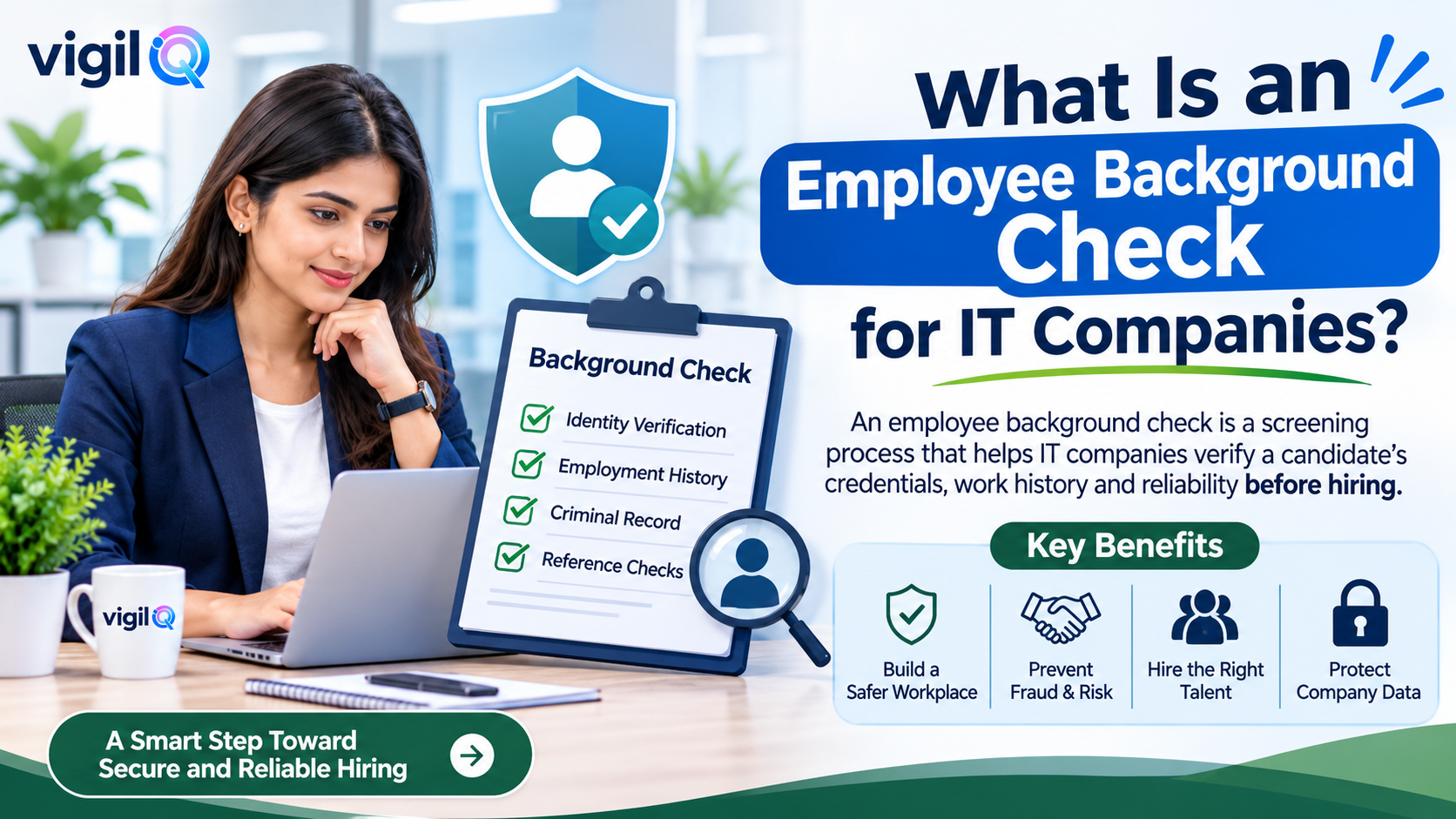
Hiring in the technology sector moves quickly, yet speed should never come at the expense of trust. An Employee Background Check for IT Companies is a structured review of a candidate’s identity, education, work history, and legal standing before that person is given access to source code, client data, and internal systems. For organizations that handle sensitive information every day, this review is not a formality. It is a core part of responsible hiring. In this guide, you will learn what such a review includes, why it matters for software and services firms, how the steps unfold, and how to stay on the right side of the law while you build a dependable team.
Think of it as a safety net for both sides. Employers gain verified facts, and honest candidates gain a fair way to prove their credentials. Whether you run a startup of ten engineers or a global delivery center with thousands of staff, the principles below will help you hire with confidence and protect the business you have worked hard to build.
Why a Pre-Employment Background Check Matters in Tech
A pre-employment background check gives hiring managers verified facts instead of assumptions. Resumes in the tech world are often polished, and portfolios can be difficult to evaluate at a glance. When a candidate claims five years at a respected product company or a degree in computer science, you deserve proof. Verification closes the gap between what is claimed and what is true, and it does so before a mistaken hire turns into an expensive problem.
The stakes are higher in technology than in many other fields. Engineers often receive administrator rights within days of joining, and remote work means access can be granted from anywhere. That makes early verification a practical safeguard rather than a bureaucratic hurdle.
Protecting Intellectual Property
IT companies build their value on code, algorithms, product roadmaps, and proprietary tools. A single employee with bad intentions or a history of misconduct can leak trade secrets, copy repositories, or sell access to competitors. Screening reduces that exposure by revealing red flags early, long before administrative credentials are issued.
Safeguarding Client Trust
Clients hand over customer databases, payment details, and confidential strategies when they sign a contract with a technology partner. Many enterprise buyers now ask vendors to prove that staff have been screened. Showing a clear verification policy can shorten security questionnaires, speed up procurement, and win contracts that competitors without such policies may lose.
Reducing Costly Hiring Mistakes
A bad hire costs far more than a salary. Recruitment fees, onboarding time, lost productivity, and team morale all take a hit. Verified information helps you choose people whose experience matches their claims, which lowers attrition and keeps delivery timelines steady.
Why a Criminal Record Check Belongs in Your Screening
A criminal record check searches official and authorized sources for convictions or pending cases linked to a candidate. For roles with privileged access, such as system administrators, database engineers, and DevOps leads, this step is especially relevant. The aim is not to reject people unfairly. The aim is to understand whether a past offense is connected to the duties of the job, particularly where finance, fraud, or data theft is involved.
Records are gathered through lawful channels, such as court databases and police verification, depending on the location and the consent given. Results should always be matched to the right person using identifiers like full name, date of birth, and address history, which avoids mix-ups with someone who shares a similar name.
Matching Findings to Job Risk
Not every record carries the same weight. A minor offense from many years ago may be irrelevant to a front-end developer role, while a fraud conviction could be a serious concern for someone managing payment systems. Strong employers define clear criteria in advance, apply them consistently, and consider the nature of the offense, the time that has passed, and the responsibilities of the position.
Fair and Consistent Decisions
Consistency protects both the candidate and the company. When every applicant for a similar role is held to the same standard, decisions are easier to defend and far less likely to be seen as discriminatory. Candidates should also have a chance to explain or dispute anything that appears on their report before a final decision is made.
Confirming Facts Through an Employment History Check
An employment history check confirms that the companies, job titles, dates, and responsibilities listed on a resume are accurate. In the technology industry, inflated titles and stretched employment dates are common, so this step is one of the most valuable parts of screening. A person who claims to have led a cloud migration should be able to show a verifiable record of working at the organization where it took place.
Reference conversations add context to documents. Speaking with a former manager can confirm technical strengths, teamwork, and reliability, which helps you judge whether the candidate will thrive in your delivery environment.
What Gets Verified
Verifiers usually confirm the employer’s name, the start and end dates, the designation held, and the reason for leaving. Some also ask about eligibility for rehire and general conduct. Education and professional certifications are often reviewed alongside these details, since many tech roles depend on specific credentials, such as cloud, security, or networking qualifications.
Spotting Gaps and Inconsistencies
Gaps in a work timeline are not automatically a problem. People take breaks for study, family, health, or freelance projects. The real concern is an unexplained inconsistency, such as overlapping jobs, mismatched dates, or a former employer that cannot be found. A short, respectful conversation with the candidate often clears up the question quickly.
A Clear Background Check Process From Consent to Report
A well-run background check process is transparent, lawful, and predictable. Candidates know what will be reviewed, recruiters know what to expect, and results arrive within a reasonable time. Many firms choose a specialist partner such as Vigil IQ Global to handle verification at scale so that internal HR teams can focus on interviews and onboarding. The usual stages look like this:
- Candidate consent: The candidate signs a written authorization that explains what will be checked and why.
- Identity verification: Government-issued documents are matched against the details on the application.
- Education and certification review: Degrees, diplomas, and professional credentials are confirmed with the issuing bodies.
- Employment verification: Previous employers are contacted to confirm titles, dates, and conduct.
- Court and police records review: Public and authorized sources are searched for legal issues relevant to the role.
- Final report and decision: Findings are compiled, reviewed against company policy, and shared with the hiring team.
Each stage should be documented so that the entire trail can be reviewed later if a question arises.
Setting Realistic Timelines
Turnaround depends on the depth of the review and the responsiveness of former employers and record sources. Domestic verification may finish in a few days, while international checks can take longer. Build these timelines into your offer process so that start dates are not delayed unexpectedly.
Using Technology to Speed Things Up
Modern screening platforms offer digital consent forms, automated reminders, and dashboards where recruiters can track progress in real time. This reduces back-and-forth emails and gives candidates a smoother experience, which matters in a market where skilled engineers often receive several offers at once.
Building Strong Tech Hiring Compliance
Strong tech hiring compliance means your screening practices follow the laws that apply where you operate and where your candidates live. In India, that includes respecting data protection obligations and obtaining clear written consent before collecting personal information. For companies serving clients abroad, requirements from other regions, such as GDPR in Europe or the Fair Credit Reporting Act in the United States, may also apply.
Compliance is also about timing. Notify candidates before starting any review, explain the purpose, and give them access to their report if they request it. Doing so builds goodwill and reduces disputes.
Consent, Privacy, and Data Handling
Collect only what you need, store it securely, and delete it when it is no longer required. Share reports only with people who have a genuine need to see them. Treating candidate data with the same care you give client data shows that your commitment to security begins with your own hiring.
Policy, Documentation, and Audits
Write a screening policy that states which roles require which checks, who reviews the results, and how disputes are handled. Keep records of consent and decisions so you can demonstrate fairness during client audits or regulatory reviews. Review the policy at least once a year as laws and threats change. Partners such as Vigil IQ Global can also help you keep documentation organized and ready for inspection.
Frequently Asked Questions
What does a background check include for tech employees?
It usually covers identity, education, past employment, and court or police records.
How long does a background check take?
Most reports are completed in three to seven working days, though international records can take longer.
Is a background check mandatory for IT hiring in India?
No single law requires it for every firm, but client contracts and security standards often do.
Can a candidate be rejected because of a record?
Yes, if the offense is relevant to the role, but a fair process lets the candidate respond first.
Do background checks apply to remote and contract workers?
Yes, remote staff and contractors with system access should be screened like full-time employees.
Conclusion
Hiring the right people is the foundation of every successful technology business, and verification is how you make sure that foundation is solid. A well-planned employee background check for IT companies protects intellectual property, strengthens client confidence, and reduces the risk of costly hiring mistakes. By combining identity, legal, and work history verification with fair policies and strong data practices, you create a hiring system that is both efficient and defensible.
Start by defining which roles need which level of screening, communicate openly with candidates, and review your approach regularly as regulations evolve. If you would rather not manage every step internally, Vigil IQ Global offers the expertise and technology to help you screen candidates accurately and on time, so your team can focus on building great products with people you can trust.