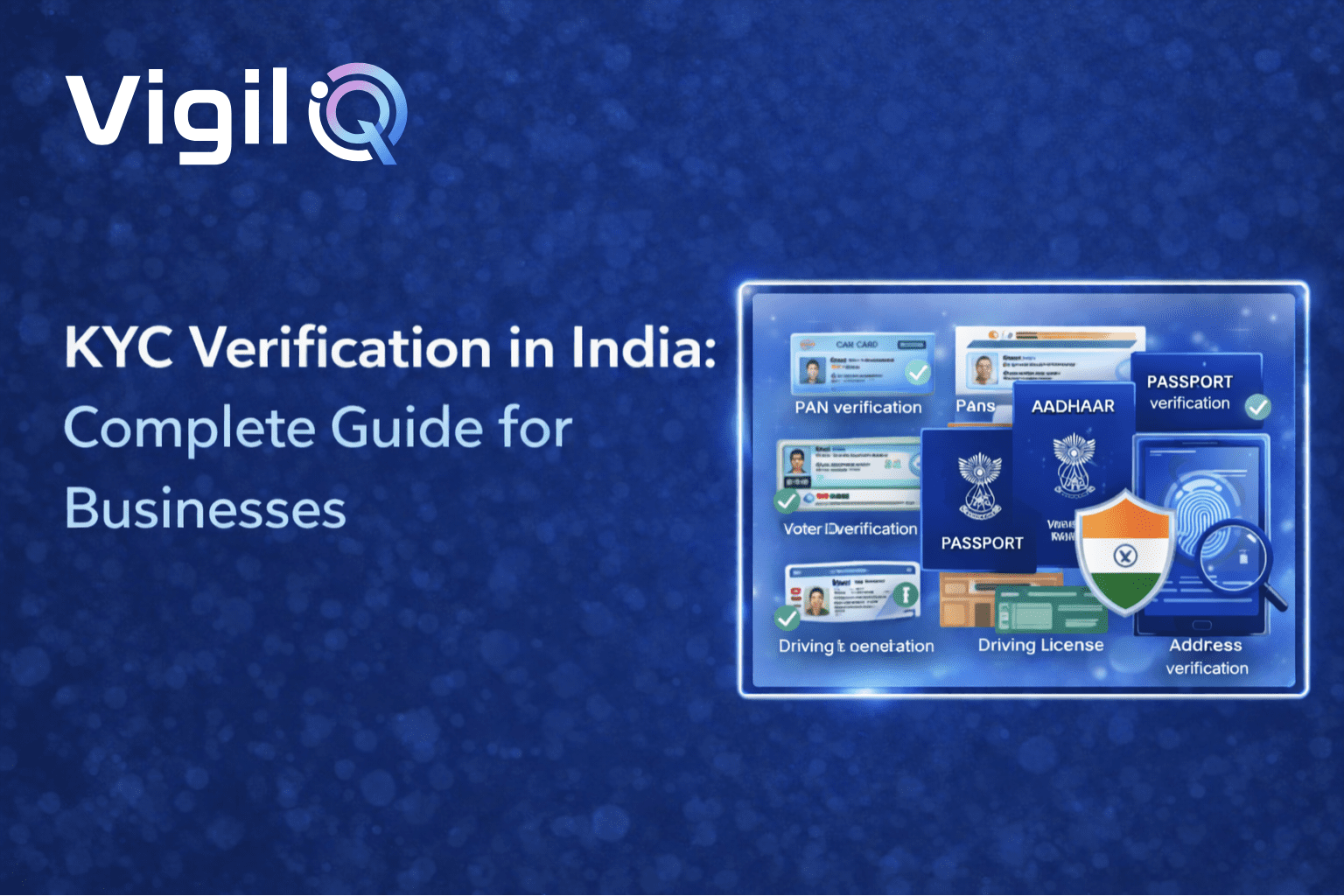
KYC Verification in India: Complete Guide for Businesses
KYC Verification in India is a mandatory identity validation process for businesses. It helps companies confirm customer identity before onboarding. More importantly, it reduces fraud and ensures regulatory compliance.
Today, digital transactions are increasing rapidly. As a result, identity fraud risks are also rising. Therefore, businesses must adopt structured and secure KYC verification processes. Without proper validation, companies may face financial loss, penalties, and reputational damage.
In this guide, you will learn how KYC verification in India works, why it matters, and how to implement it effectively.
What Is KYC Verification in India?
KYC stands for Know Your Customer. It is the process of verifying the identity of a customer before starting a financial or service relationship.
In India, KYC verification typically includes:
PAN verification
Aadhaar verification
Passport verification
Driving license verification
Voter ID verification
Address verification
Each of these checks confirms identity details such as name, date of birth, and address. When combined, they create a strong identity verification framework.
Why KYC Verification in India Is Important
KYC verification in India is required by regulators such as RBI and SEBI. However, compliance is not the only reason it matters.
1. Fraud Prevention
Identity fraud is becoming more advanced. Therefore, real-time KYC verification helps detect fake documents early. As a result, businesses avoid financial losses.
2. Regulatory Compliance
Non-compliance can lead to heavy penalties. Consequently, businesses must follow proper KYC compliance requirements.
3. Risk Reduction
When identity checks are done properly, high-risk individuals are flagged early. Moreover, businesses reduce operational risks.
4. Customer Trust
Secure verification builds confidence. In addition, customers feel safer sharing their data.
Digital KYC Verification in India vs Traditional KYC
Earlier, KYC was manual and paper-based. However, technology has changed this process.
Traditional KYC
Physical document collection
Manual data entry
Longer processing time
Higher human error
Digital KYC Verification
API-based identity verification
Real-time database validation
Paperless workflows
Faster onboarding
Because digital KYC is automated, it improves speed and accuracy. Therefore, most fintech and BFSI companies now prefer digital verification.
Step-by-Step KYC Verification Process
A structured process improves both compliance and efficiency.
Step 1: Data Collection
First, the customer submits identity details such as PAN or Aadhaar.
Step 2: Document Authentication
Next, the system verifies documents using authorized databases.
Step 3: Cross-Verification
Then, the name, date of birth, and address are matched across records.
Step 4: Risk Assessment
After that, the system checks for mismatches or suspicious patterns.
Step 5: Final Decision
Finally, the onboarding process is approved or escalated for review.
Because each step is automated, the process becomes faster and more secure.
Common Challenges in KYC Verification in India
Even though KYC is mandatory, businesses face several challenges.
Incomplete documents can delay onboarding. However, automated checks reduce such delays.
Minor spelling differences can cause mismatches. Therefore, smart data matching tools are important.
Fake documents are becoming more sophisticated. As a result, real-time database validation is essential.
Manual verification increases errors. Consequently, digital systems are more reliable.
Best Practices for Effective KYC Verification
Businesses should follow these best practices:
Use API-based identity verification
Combine PAN, Aadhaar, and address checks
Automate document validation
Maintain secure audit logs
Collect proper user consent
Update compliance policies regularly
When these steps are followed, verification becomes both secure and scalable.
Industries That Require KYC Verification in India
KYC verification is important across multiple industries.
Banking and Financial Services
Fintech platforms
NBFCs
Insurance companies
HR and staffing firms
Gig economy platforms
Because these sectors handle financial data, strong identity verification is critical.
The Future of KYC Verification in India
Technology continues to evolve. Therefore, KYC processes are also improving.
Artificial intelligence now helps detect fraud patterns. In addition, biometric authentication improves accuracy.
In the future, businesses will rely more on:
AI-based fraud detection
Face match verification
Automated document analysis
Blockchain identity systems
As digital ecosystems grow, secure KYC verification will become even more important.
Conclusion
KYC verification in India protects businesses from fraud and compliance risks. Moreover, it strengthens digital onboarding processes.
By adopting real-time and automated identity verification, organizations can reduce risk and improve efficiency. Therefore, investing in secure KYC systems is not optional. It is essential for long-term growth.