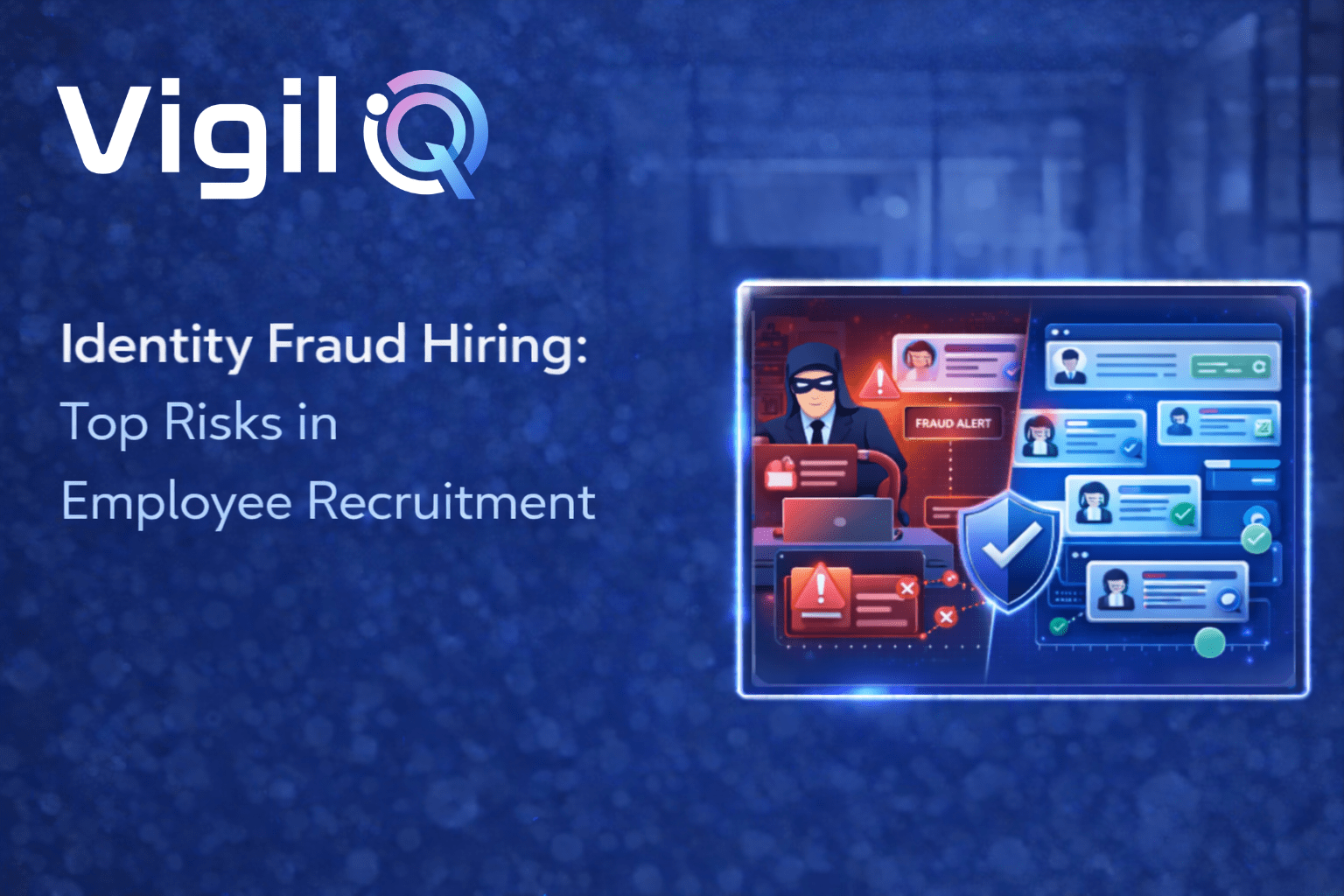
Identity Fraud Hiring: Top Risks in Employee Recruitment
Identity fraud hiring is becoming a serious problem for many companies. Businesses now receive hundreds of job applications for a single position. At the same time, many hiring processes are fully digital. As a result, fraud risks during recruitment are increasing.
Fraudulent candidates may submit fake documents or false work history. In some cases, they may even use another person’s identity. Because of this, companies may unknowingly hire individuals who create financial, operational, or security risks.
Therefore, organizations must address identity fraud hiring early in the recruitment process. Companies can reduce these risks by using identity verification, employment verification, and structured background checks.
This guide explains the most common identity fraud hiring risks. It also explains how businesses can prevent hiring fraud.
Why Identity Fraud Hiring Is Increasing
Identity fraud hiring is increasing for several reasons. First, recruitment has become highly digital. Many companies now conduct interviews online and complete onboarding remotely.
Because recruiters often do not meet candidates in person, fraudsters may attempt to exploit hiring systems. Fake documents and manipulated resumes can sometimes pass manual checks.
In addition, companies often need to hire quickly. When recruiters skip proper verification steps, the risk of identity fraud hiring increases.
Therefore, businesses must strengthen hiring processes with proper verification and screening.
Fake Documents in Identity Fraud Hiring
Fake identity documents are one of the most common hiring fraud risks. Some candidates submit forged or altered identity documents.
For example, applicants may provide fake versions of Aadhaar cards, PAN cards, passports, or driving licenses. At first glance, these documents may appear genuine.
However, visual checks alone are not always reliable. Therefore, companies should implement identity verification systems.
Digital verification checks confirm whether identity details match official government records. As a result, organizations can quickly detect fake identity documents.
Identity verification also strengthens compliance and reduces hiring risks.
Resume Fraud in Identity Fraud Hiring
Resume fraud is another common hiring risk. Some candidates exaggerate qualifications or create fake work histories.
For instance, applicants may claim to have worked for companies where they were never employed. Others may extend employment dates or inflate job titles.
Because recruiters review many resumes every day, these inconsistencies may go unnoticed.
Employment verification helps prevent this issue. This process confirms a candidate’s previous job history with past employers.
In addition, companies may perform CV validation to identify inconsistencies in resumes.
As a result, recruiters can ensure hiring decisions are based on accurate information.
Interview Impersonation in Identity Fraud Hiring
Interview impersonation is another growing problem in remote hiring. In some cases, the person attending the interview is not the same person who joins the organization.
For example, a more experienced individual may attend the interview on behalf of the candidate. Later, a different person may appear during onboarding.
This situation creates serious risks, especially for technical roles.
Therefore, companies must verify candidate identity during interviews. Structured interviews and identity checks help ensure the same person completes each hiring stage.
AI-led interview systems can also help recruiters detect inconsistencies.
Dual Employment Fraud
Dual employment fraud occurs when employees secretly work for multiple companies at the same time.
Remote work has increased flexibility. However, it has also created new risks.
Employees engaged in dual employment may divide working hours across multiple organizations. In some cases, they may share confidential information.
Consequently, companies may face operational and legal challenges.
To prevent this issue, businesses often perform employment verification and dual employment checks. These checks help identify undisclosed job relationships.
Criminal Background Risks in Identity Fraud Hiring
Undisclosed criminal history is another risk in identity fraud hiring. Some candidates intentionally hide past legal issues.
Although every candidate deserves fair consideration, companies must also ensure workplace safety.
Criminal record verificationhelps identify serious legal risks before hiring.These checks allow organizations to make informed hiring decisions. As a result, companies can maintain safe and compliant workplaces.
Address Mismatch in Identity Fraud Hiring
Address mismatch is another warning sign of hiring fraud. Some candidates provide incorrect or false residential addresses.
Incorrect address information can create issues during documentation and communication.
Therefore, companies perform address verification to confirm candidate residency details.
Address checks help ensure employee information is accurate. Moreover, they support compliance and background screening.
Financial and Compliance Risks
Some positions involve access to financial systems or sensitive business data. In these cases, financial checks may be necessary.
Companies may review credit reports or financial records to identify potential risks.
Additionally, organizations may perform sanctions checks. These checks ensure candidates are not listed on global watchlists.
Consequently, companies can maintain regulatory compliance and reduce fraud risks.
How Businesses Can Prevent Identity Fraud Hiring
Preventing identity fraud hiring requires a structured hiring process.
First, companies should perform identity verification early in recruitment. This confirms candidate identity details.
Second, employment verification confirms work history and professional experience.
Third, background checks help detect criminal records or legal risks.
Fourth, structured interviews help detect impersonation and improve candidate evaluation.
Finally, address verification confirms residential details.
When businesses combine these checks, they significantly reduce hiring fraud risks.
The Role of Technology in Hiring Fraud Prevention
Technology now plays an important role in preventing hiring fraud.
Many organizations use automated verification systems to validate identity documents and background records.
Verification APIs allow companies to perform identity checks in real time. As a result, recruitment becomes faster and more secure.
In addition, AI-powered screening systems can detect inconsistencies in candidate data.
Therefore, organizations that use modern verification technology create stronger hiring processes.
FAQs
What is identity fraud hiring
Identity fraud hiring occurs when candidates provide fake identity documents, incorrect personal details, or false employment history during recruitment.
Why is identity fraud hiring increasing
Identity fraud hiring is increasing because many companies now use digital hiring and remote onboarding processes.
How can companies prevent identity fraud hiring
Companies can prevent identity fraud hiring by implementing identity verification, employment verification, background verification, and structured interviews.
What is employment verification
Employment verification confirms a candidate’s previous job history with former employers.
Why is identity verification important in hiring
Identity verification ensures that candidate identity documents match official records and helps companies avoid hiring fraudulent applicants.
Conclusion
Identity fraud hiring is a growing challenge for modern organizations. Fake documents, resume fraud, impersonation, and hidden employment can create serious risks.
However, companies can reduce these risks with proper verification systems.
Identity verification, employment verification, criminal record checks, and address verification help ensure candidate information is accurate.
Therefore, organizations that strengthen their hiring processes can prevent identity fraud hiring and build a trustworthy workforce.